
Wisdom teeth, also known as third molars, typically emerge during the late teenage years or early twenties. They are referred to as “third molars” because they develop after the second molars have already erupted.
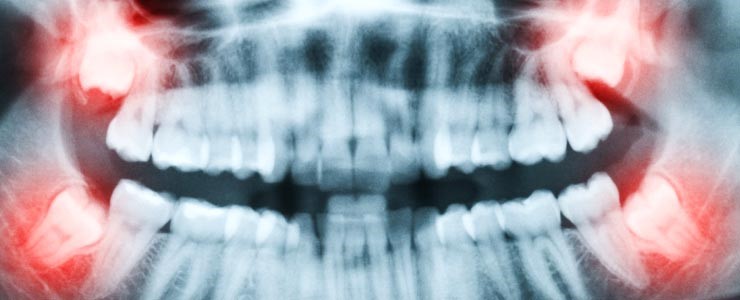
When wisdom teeth grow straight and are properly aligned, they can be a useful addition. However, they often grow at awkward angles or sideways, causing numerous problems. This misalignment can lead to overcrowding and damage to the neighboring second molars.
Very often, there is a discrepancy in the size of the teeth and the size of the jaws leading to impactions. Visit our dentist near you to assess whether you need your wisdom teeth removed.
Impactions can lead to a number of oral health complications including;
- Pain
- Infection
- Tooth Crowding
- Cyst Formation
- Ulcerations
- Food traps
- Caries (Decay)
Book an appointment with your NW Calgary Dentist!
At Springhill Dental, our dentist in NW Calgary can take diagnostic images via our digital radiographs (x-rays) to assess what is going on underneath the gums and to help determine if the wisdom teeth need to be extracted and to determine what is the safest method to remove them.
Our dentist in Calgary proudly serves patients from the surrounding areas of Scenic Acres, Ranchlands, Northwest Calgary, Silver Springs, and Bowness. Visit us today to learn more about wisdom tooth extractions!
Visit our dentist in NW Calgary for various oral care services, including dentures, sedation dentistry, emergency dentistry, children’s dentist in Calgary, TMJ, crowns, white fillings, root canal therapy, TMJ treatment, implants, veneers, Invisalign, fillings, teeth whitening, etc.
FAQs
Wisdom teeth are basically the last molars to grow and usually emerge in early adulthood. Because they appear later than other teeth, they don’t always have enough room to grow properly. When wisdom teeth place pressure on nearby teeth, become difficult to keep clean, or cause discomfort, removal may be recommended to avoid future oral health problems.
Some people notice warning signs such as soreness at the back of the mouth, swollen gums, recurring irritation, or difficulty chewing comfortably. In other cases, concerns are identified during routine dental imaging before symptoms start. A consultation allows your dentist to evaluate tooth position and determine whether removal is advisable.
The extraction is performed using appropriate numbing methods so you shouldn’t feel pain during the procedure. Depending on your needs and the complexity of the extraction, options may be discussed to help you stay relaxed and comfortable. Our team focuses on minimizing discomfort throughout your visit.
Before removal, your dentist will review your X-rays and explain the plan for the procedure. The tooth is then carefully removed, and the area is cleaned to support healing. If needed, stitches may be placed. You’ll receive clear aftercare instructions before you leave so you know how to care for the area at home.
Recovery varies from person to person, but most swelling and soreness improve within a few days. Many patients go back to normal activities shortly after, while complete healing takes longer. Following post-treatment guidance—such as resting, eating soft foods, and managing swelling—can help support recovery.
As with any dental procedure, some risks exist. These may include swelling, infection, delayed healing, or temporary sensitivity near the extraction site. Your dentist will discuss potential risks ahead of time and take steps to reduce complications through careful planning and follow-up care.
Coverage for wisdom tooth removal depends on your dental insurance plan. Many plans provide partial coverage for extractions, and Spring Hill Dentist offers direct billing where applicable. Our administrative team can review your benefits and explain expected costs before treatment.